Feeding 60 people in the desert with service design that outlasted the camp

Role

Kitchen Lead, Service Designer

Scope

Operations design, logistics planning, infrastructure upgrades

Timeline

System designed in 2015, iterated through 2022, ran for ten years

Context

Hotel California, a Burning Man camp (2014–2024)

Burning Man is a 70,000-person arts festival in the Nevada desert. There is almost no community infrastructure. You can buy ice. There are medics in case of emergency. Everything else - shelter, food, water, power, waste disposal - you bring yourself or build with your camp.

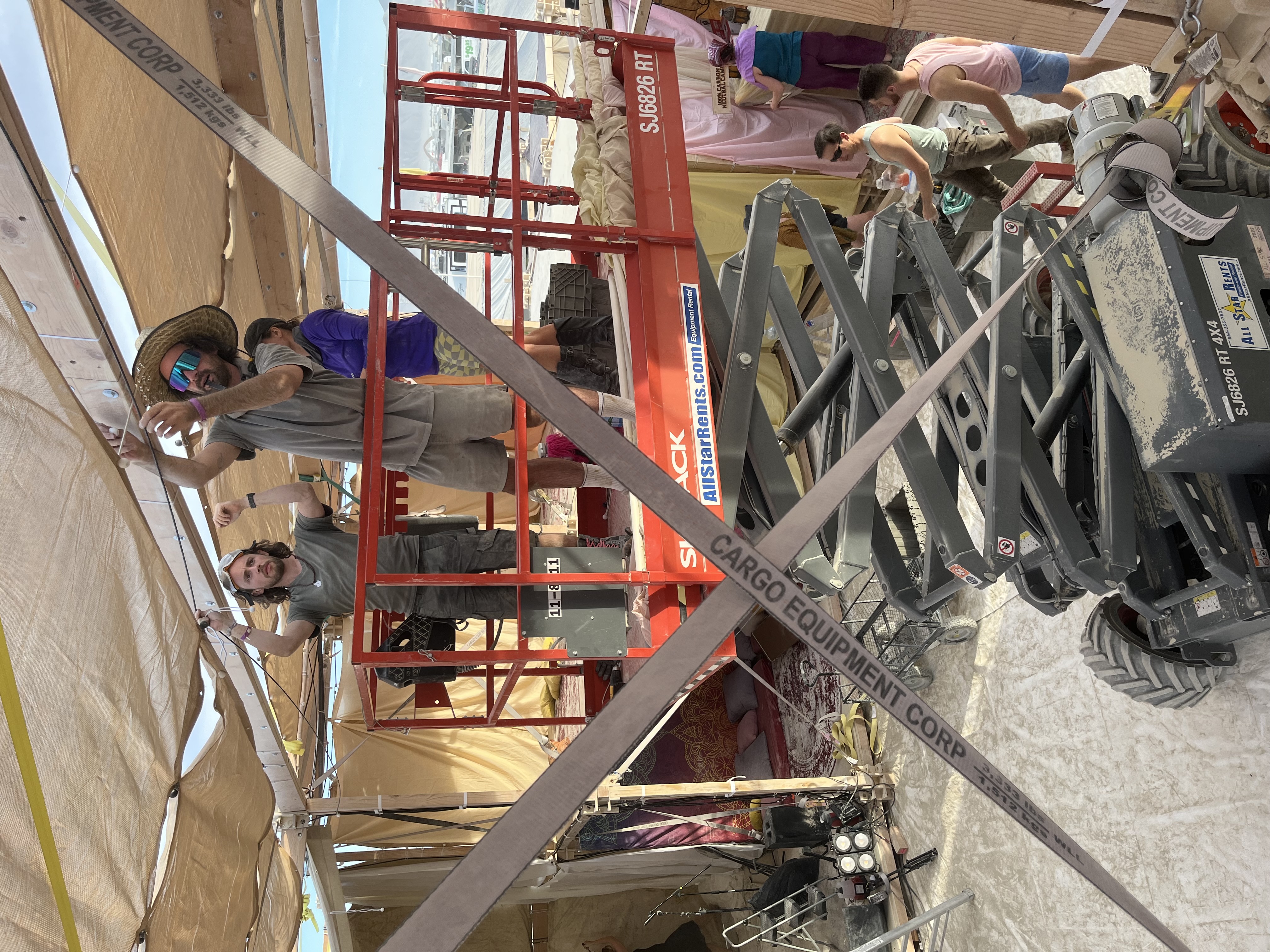
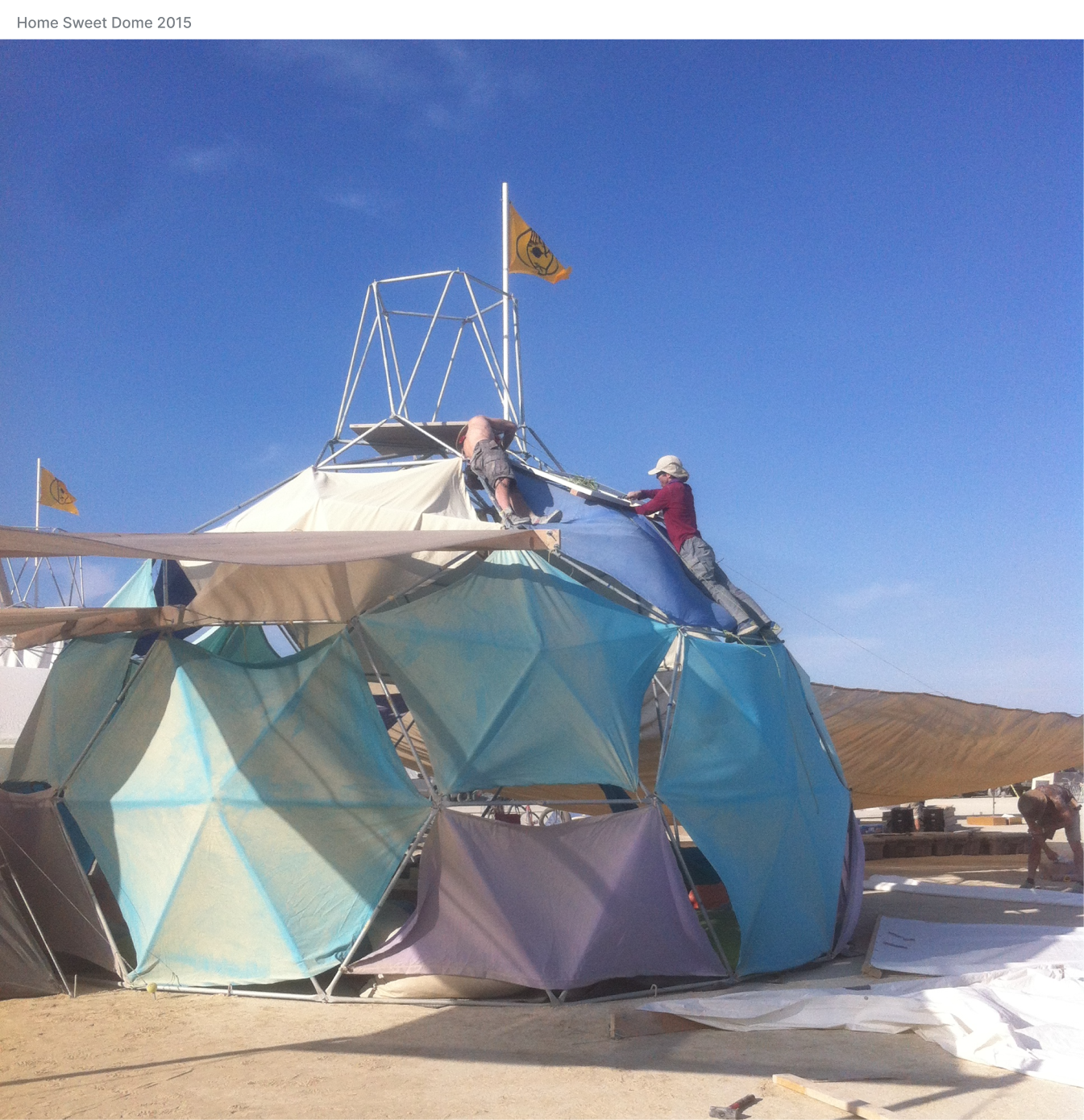
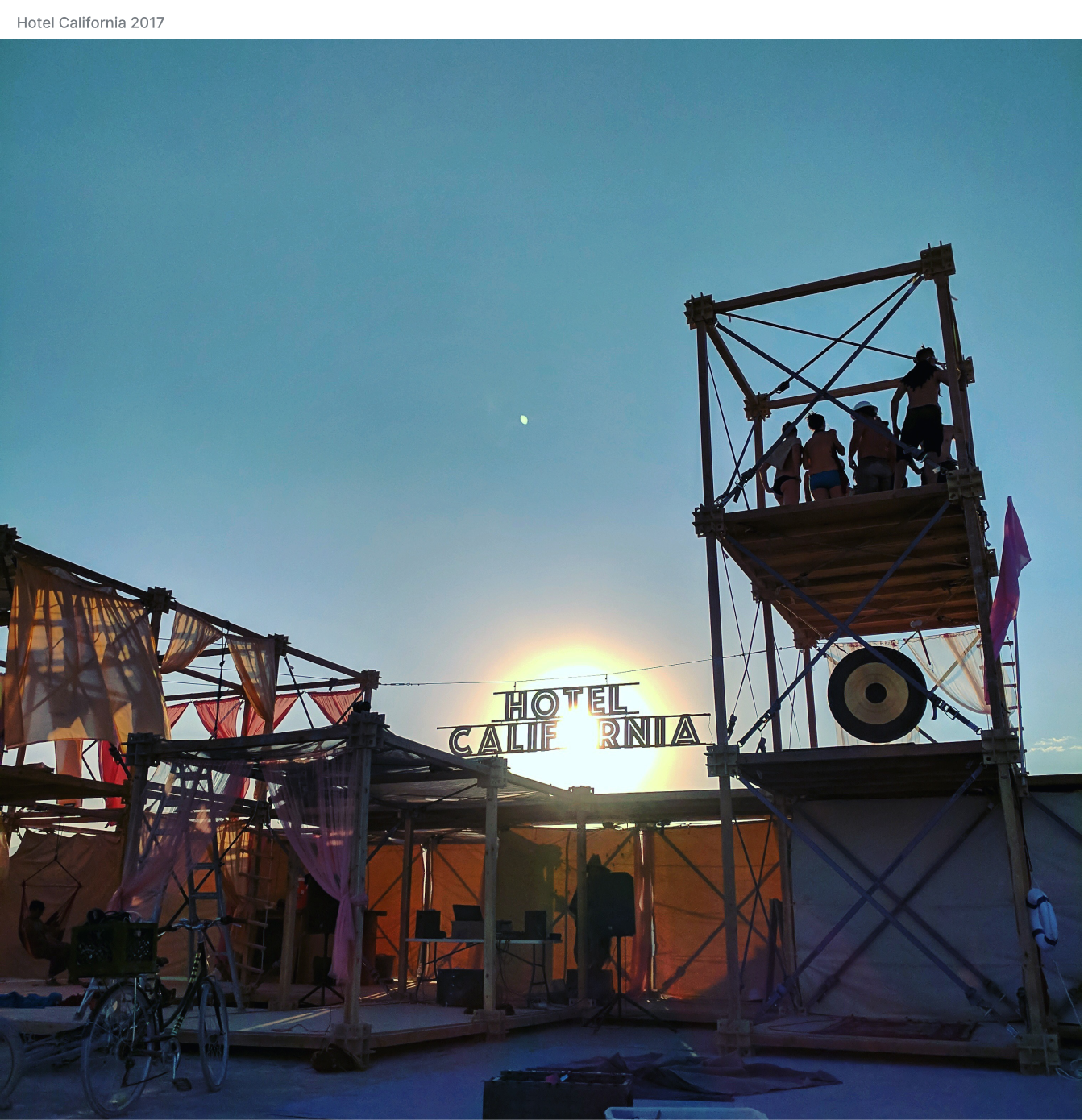
Hotel California started as Home Sweet Dome, a camp of 25 people around a geodesic dome in 2014. By 2017 the camp had evolved into Hotel California, building a multi-story wooden structure every year using modular cubes with node joinery. By 2022 it was two stories tall and required rented heavy machinery for builds and teardowns. Like most camps, it ran entirely on volunteer labor. Members shared responsibilities for construction, hauling equipment, running the sound system, and feeding everyone two meals a day.

The kitchen was where the volunteer model broke down. It was also, eventually, one of the backbones that supported the camp's growth.
2014: Watching the system fail
The first year, kitchen duty was voluntary. You and a friend could sign up to cook a meal for the camp. Some people volunteered and did a great job. But volunteering and following through are different things at a festival. One person wouldn't show up. Sometimes both didn't. When that happened, the same people who had already cooked and knew the kitchen would step in again. They got stuck, and were being punished for being reliable.

The problem wasn't effort or intention. It was structural. A volunteer system with little accountability and poor options for fallback meant the kitchen depended on goodwill that couldn't scale. At 25 people it barely held together. The camp was growing to 50 the following year.
2015: Building tribes
When the camp lead invited me back for 2015, I said I wanted to lead the kitchen. Not because I wanted to cook more, but because I wanted the kitchen to stop failing.

The camp lead valued the volunteer ethos. I made it simple: volunteering doesn't work for the kitchen. If you're in the camp, you have a day. But mandatory participation didn't have to feel mandatory. The system needed structure. It also needed to feel like something people wanted to be part of.

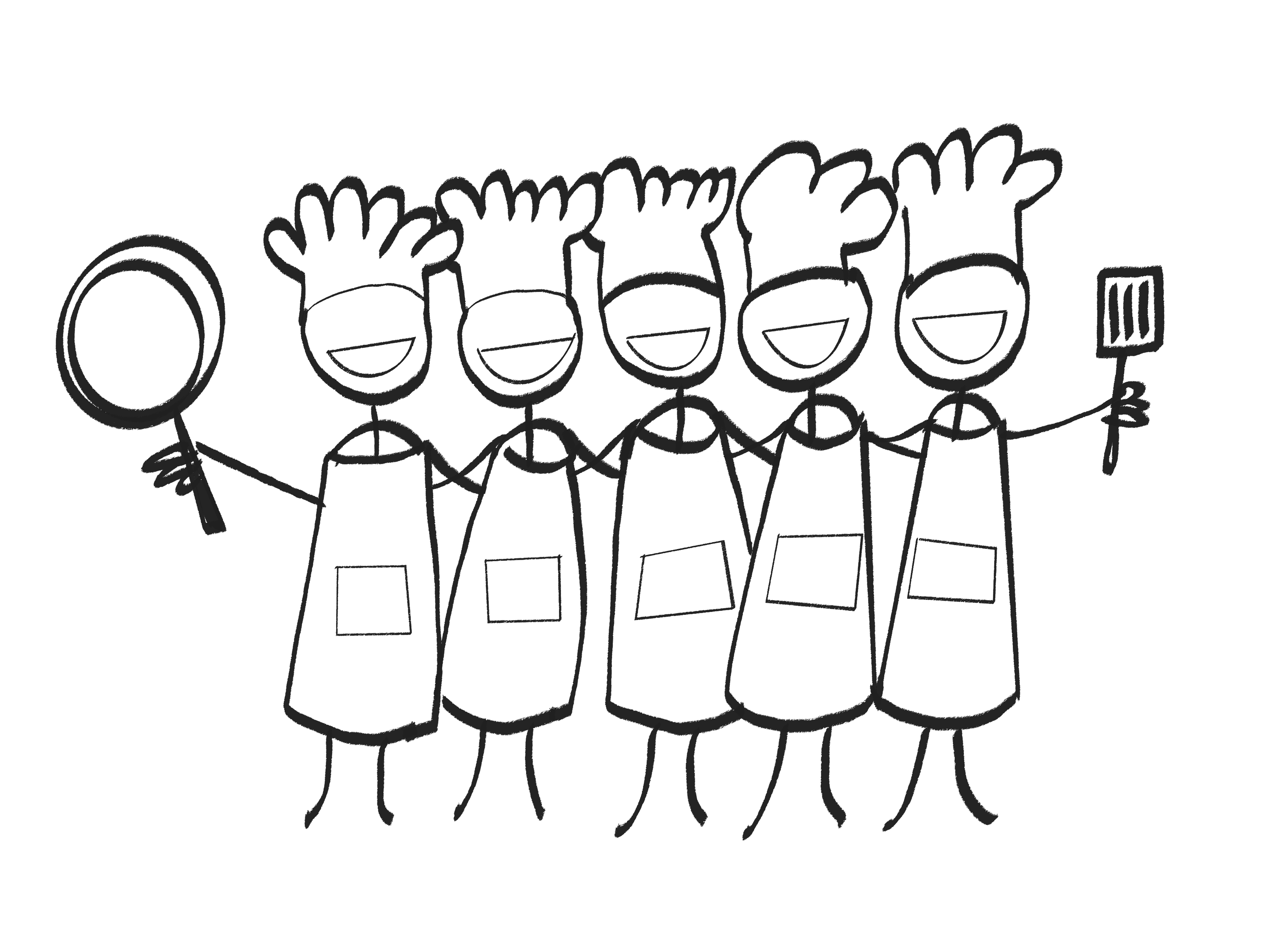
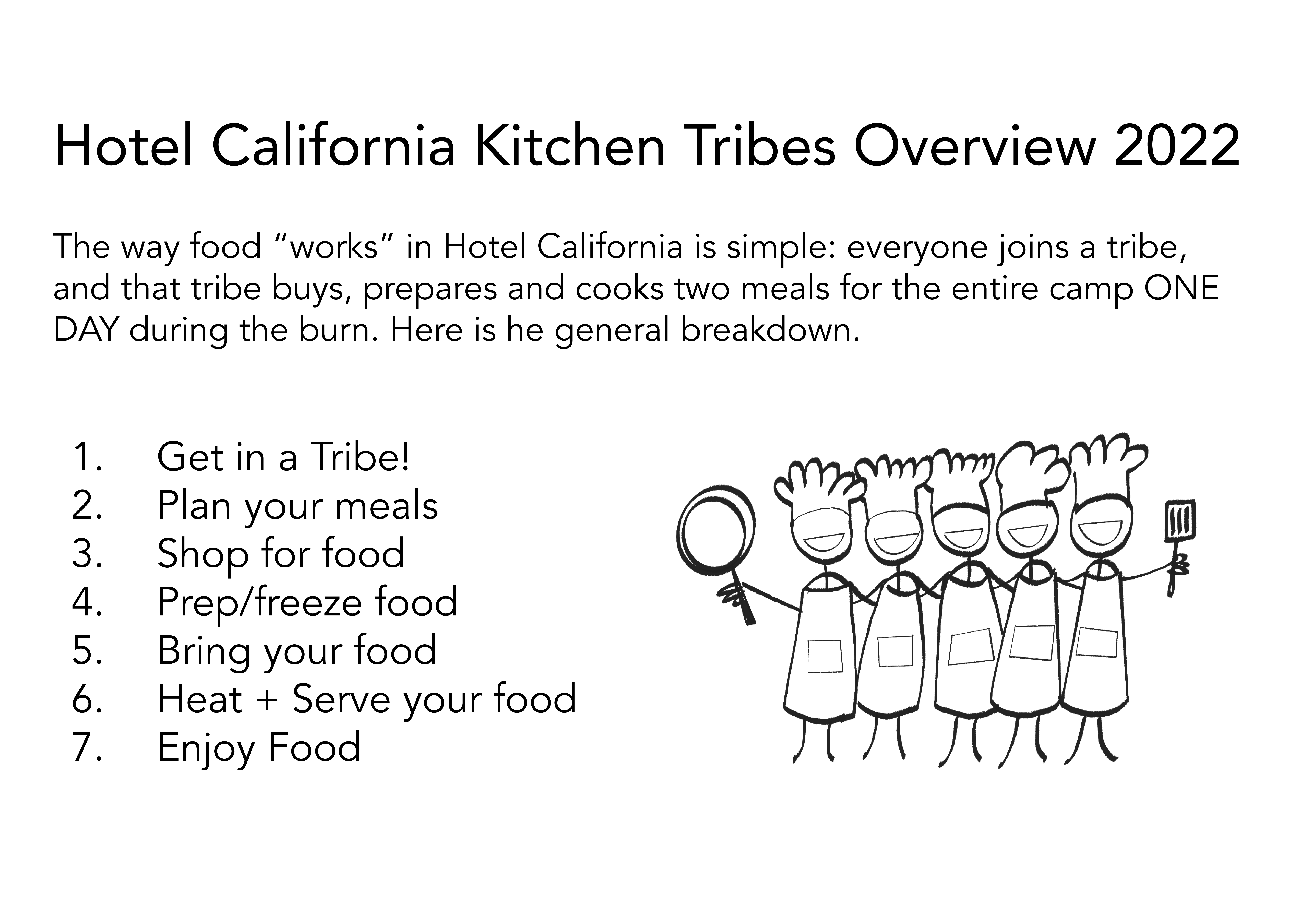
I called the groups Tribes. The framing mattered: this wasn't a chore rotation, it was your crew making a gift to the camp. The accountability was structural, but the experience was communal.

How tribes worked

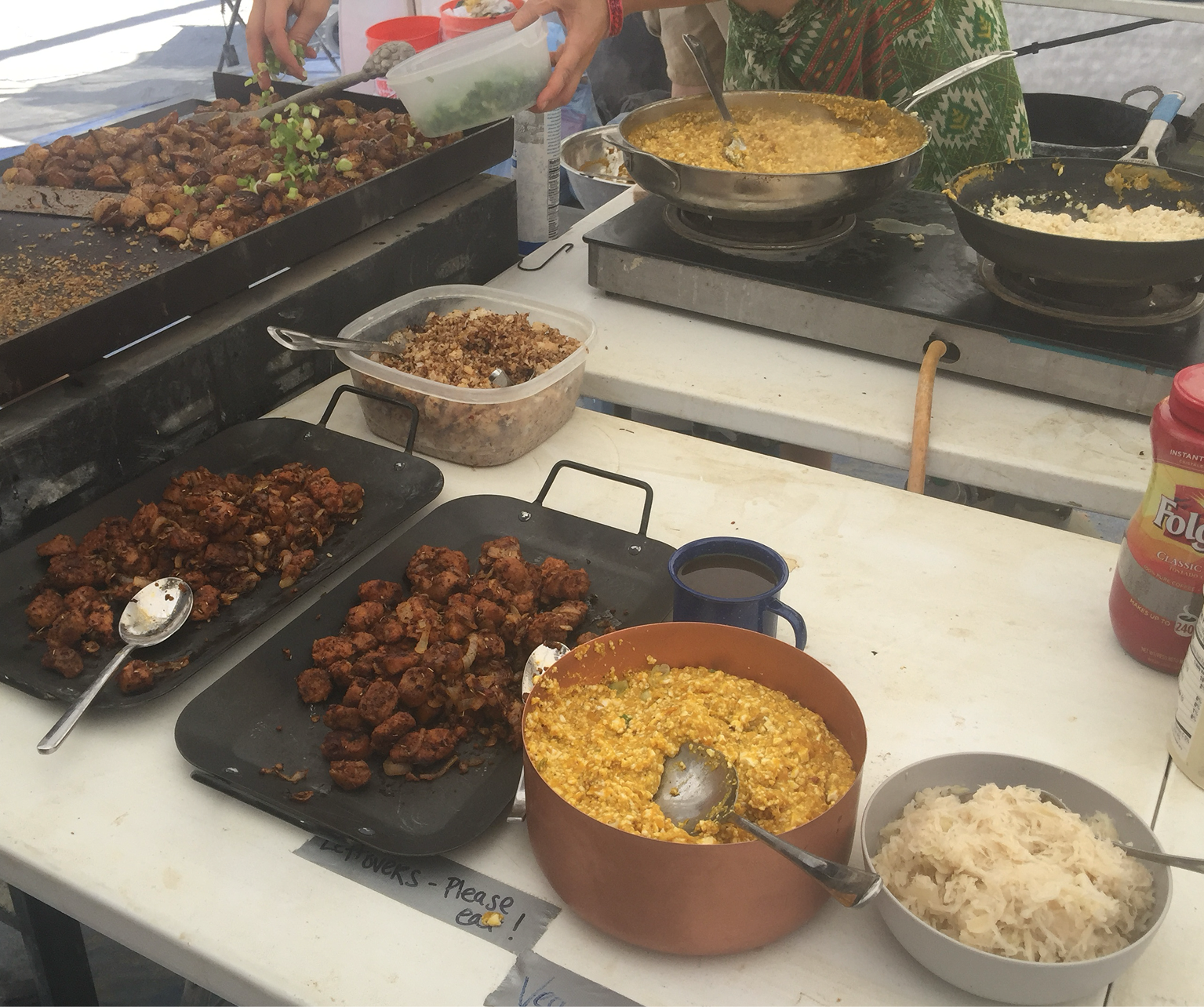
Each Tribe was a group of roughly five people responsible for feeding the entire camp for one full day, both meals. Members self-selected into groups, but stragglers were assigned. A spreadsheet tracked open slots based on the number of people attending, weighted by arrival and departure dates. Some days had smaller crews of two or three if they fell during setup or teardown when fewer people were on the playa.

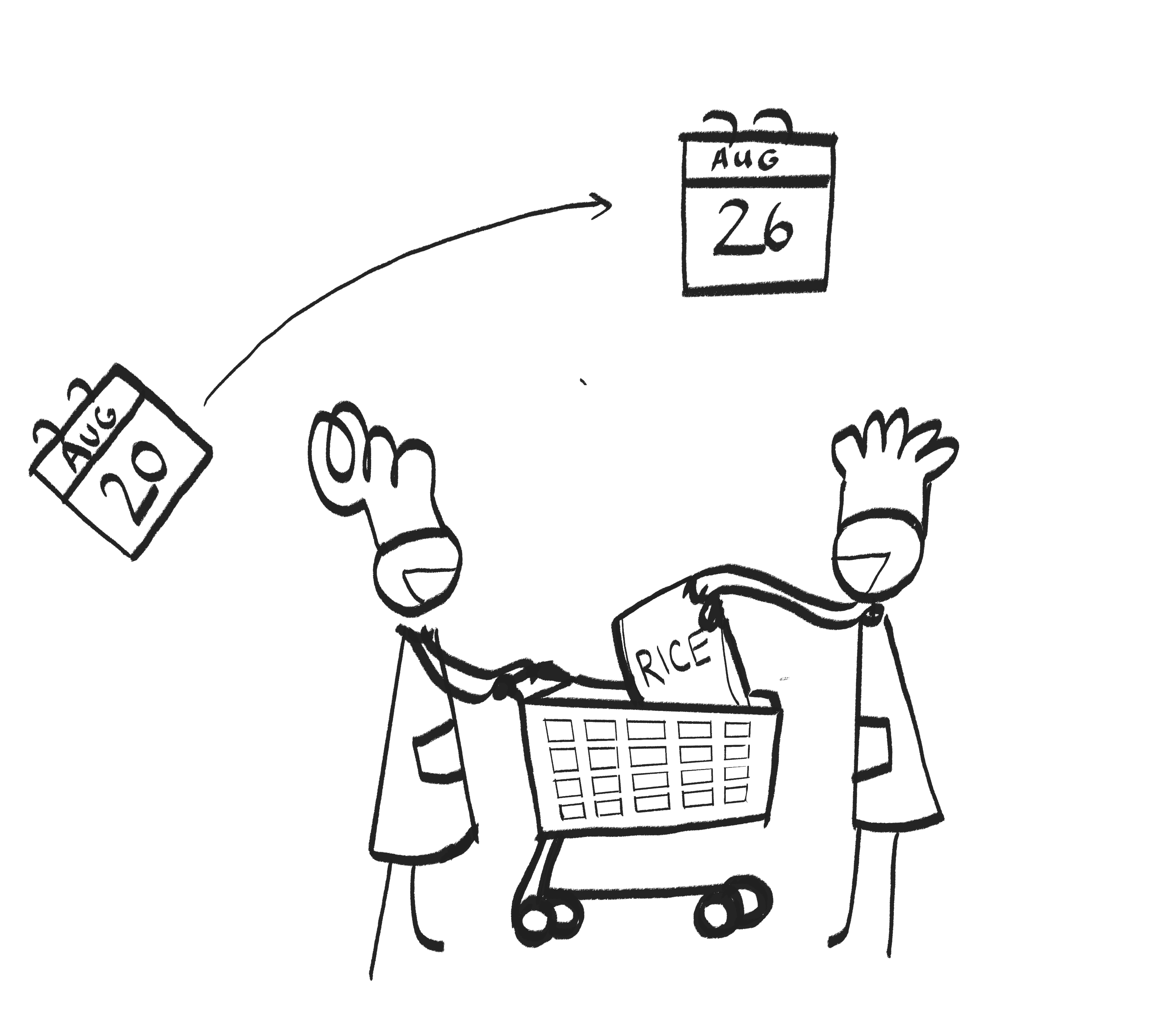
Each Tribe chose a lead as the point person. They collaborated before the burn to decide what to cook, plan their grocery list, and coordinate shopping. I surveyed camp members on dietary preferences and set the food policy as all vegan, based on what I knew about the camp’s needs and what would ensure everyone could eat every meal without exceptions.
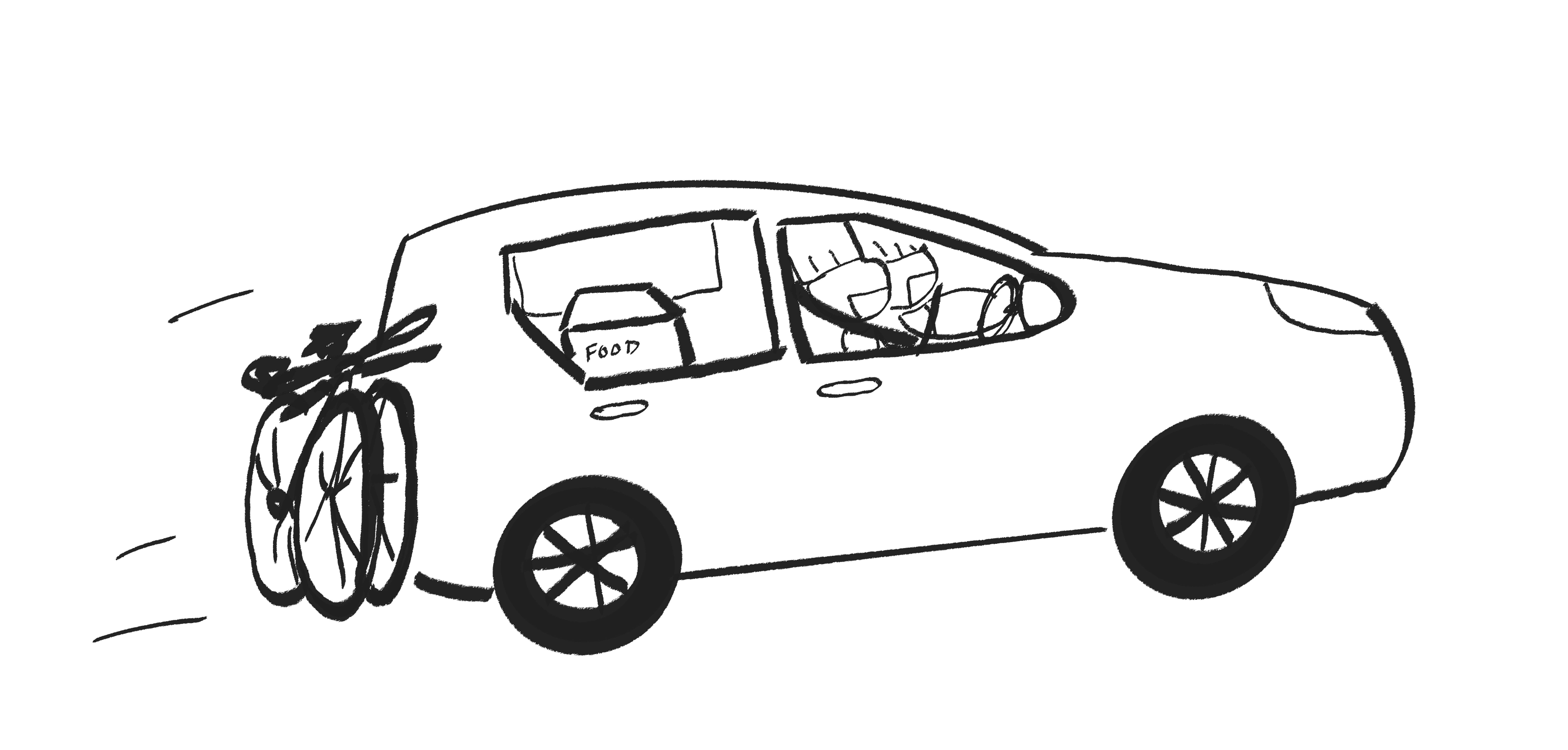
Tribes owned the full day. Planning, shopping, bringing the food, cooking, serving, and cleaning up. The rest of the week, you just showed up and ate.

What it changed

The structural fix was clear: mandatory participation with group accountability replaced individual voluntarism. Five people planning together meant one absence didn’t collapse the meal. But the less obvious outcome was social. The Tribe model gave new members a way to connect with a small group and another way to contribute before they even arrived in the desert. Picking a name, planning meals together, coordinating a grocery run, these were low-stakes ways to build relationships with people you’d be living with for a week.

2022: Infrastructure upgrades

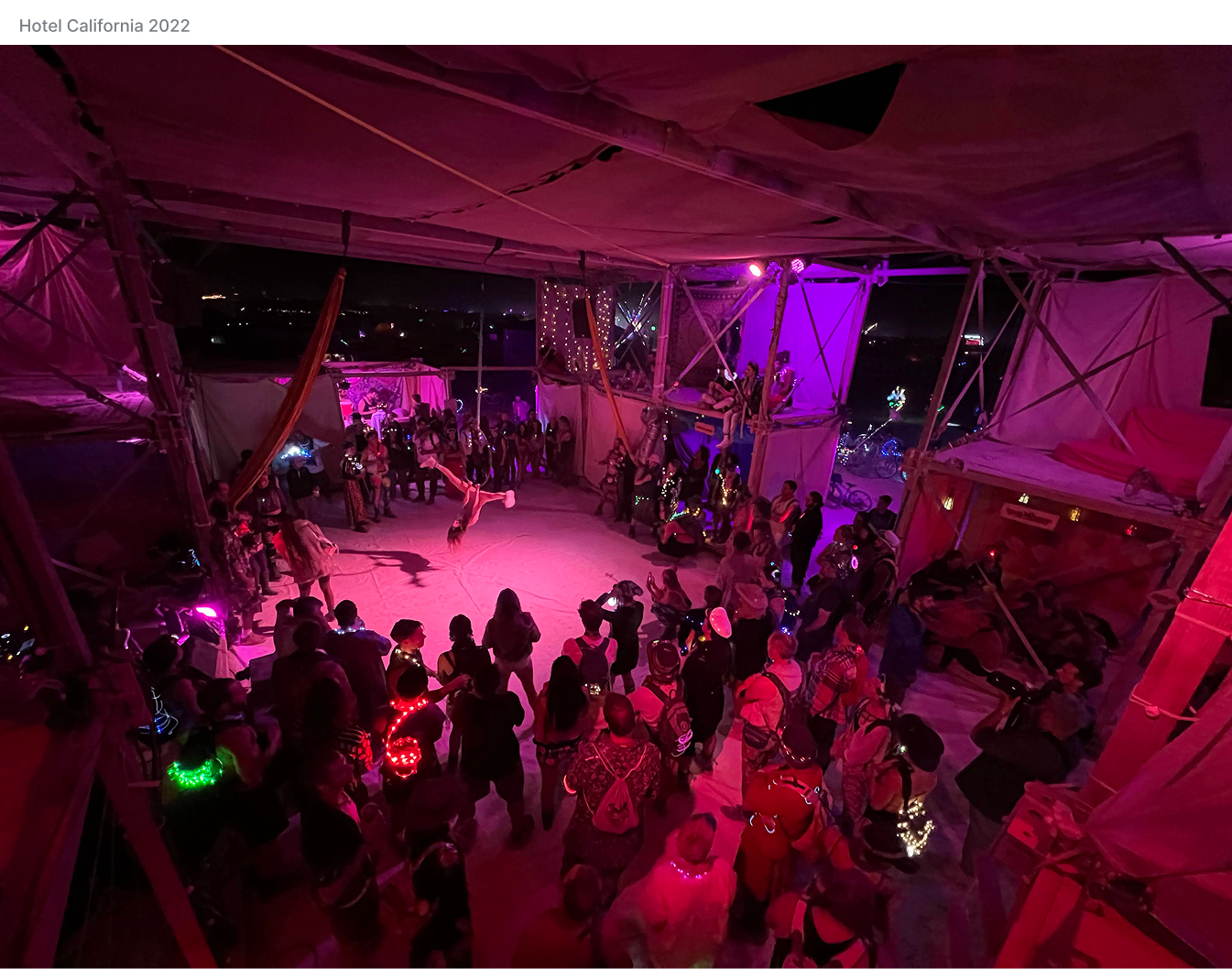
By 2022, the camp had grown to 60 people and I returned for the first time in five years. The Tribe system was still running, exactly as I’d set it up. But the physical kitchen hadn’t kept pace with the camp’s growth.

I put together a full redesign proposal with a spatial plan, equipment specifications, and a budget.

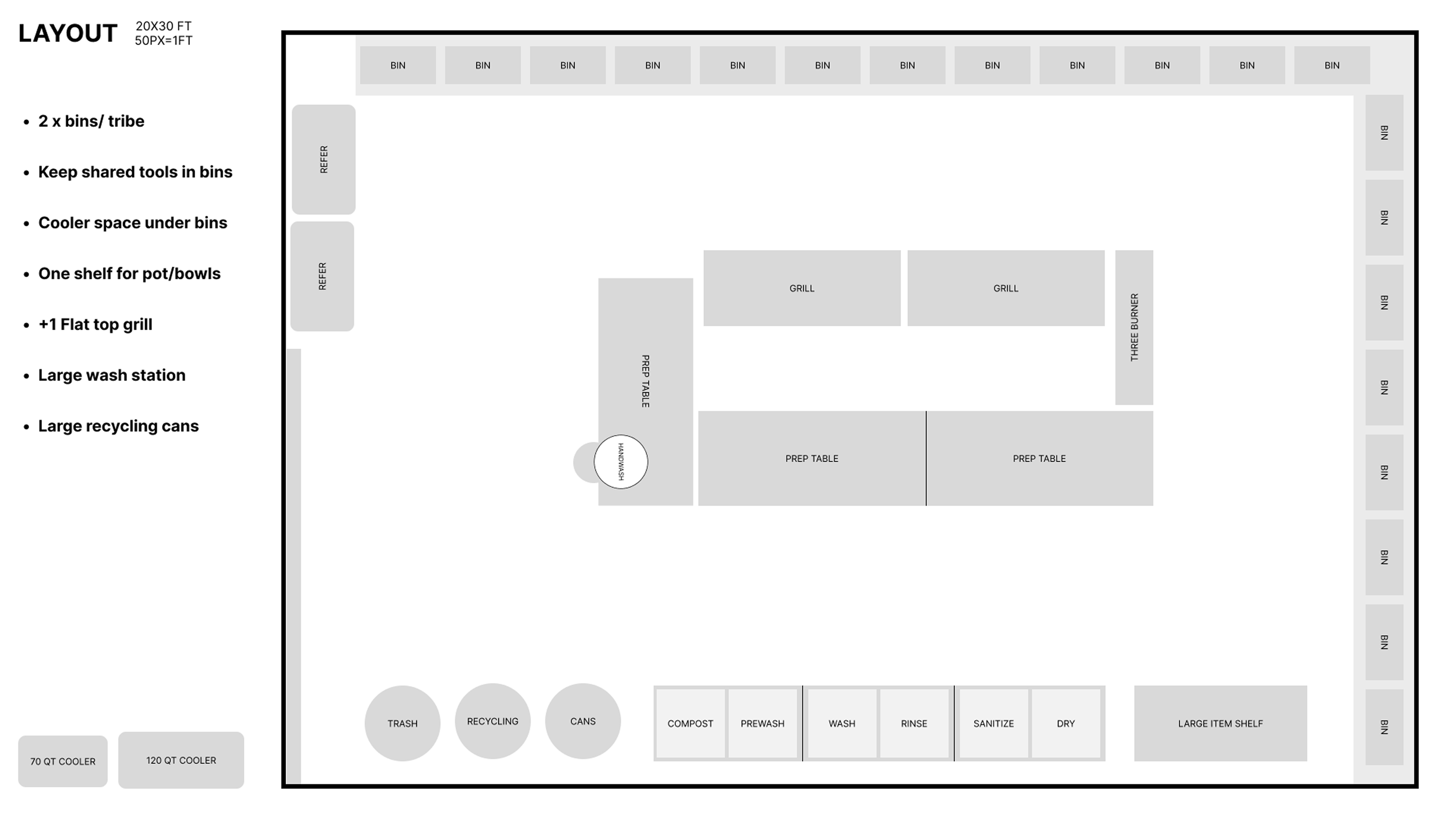
Kitchen layout

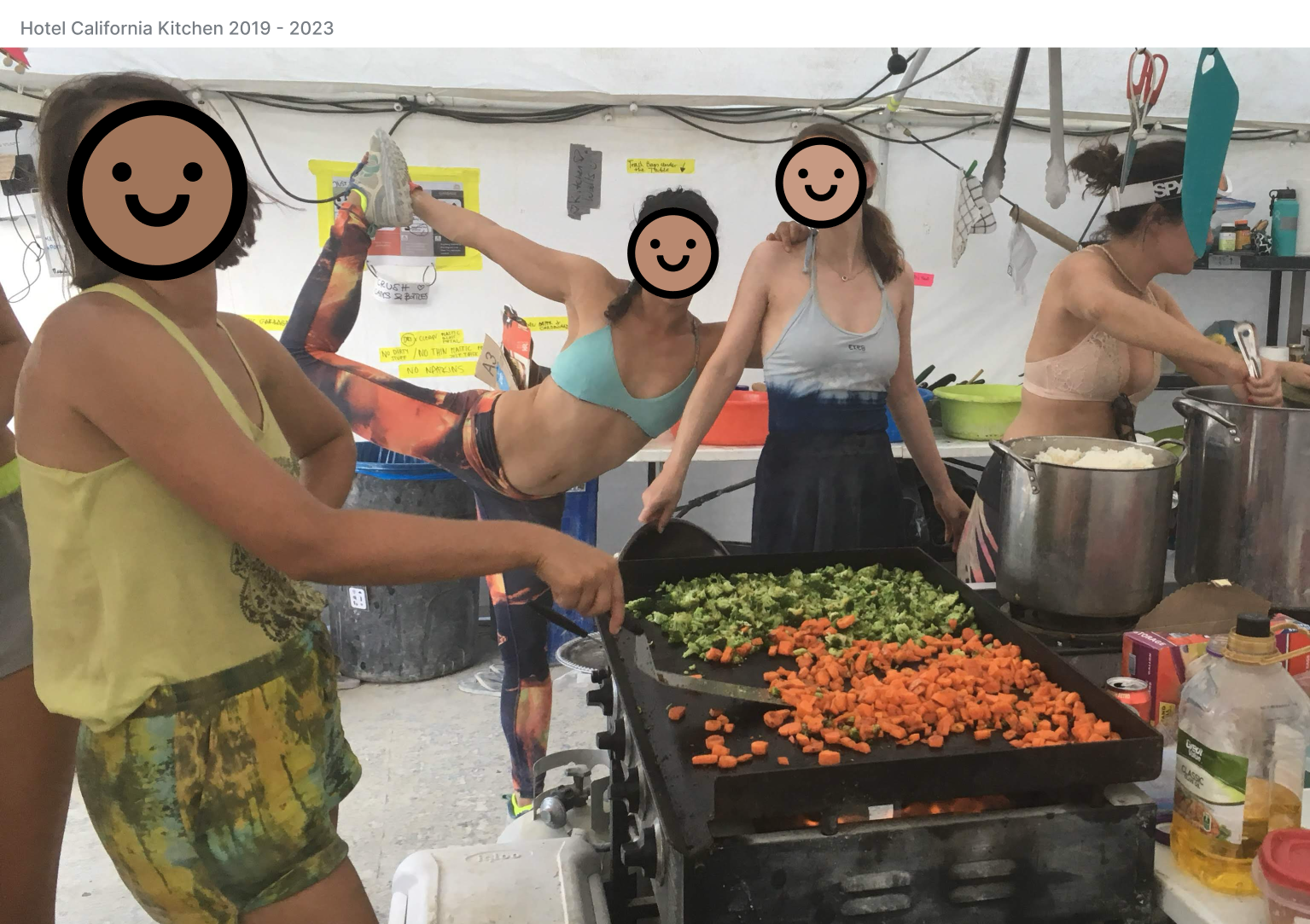
Designed a 20x30 foot kitchen layout with dedicated zones. Prep tables and flat top grills occupied the center, doubling as the serving area when meals were ready. A handwash station sat at the entry point. Along the perimeter: compost and wash stations, Tribe-designated space for coolers and dry goods, and portable refrigerators anchoring the far end.
Storage, waste, and prep
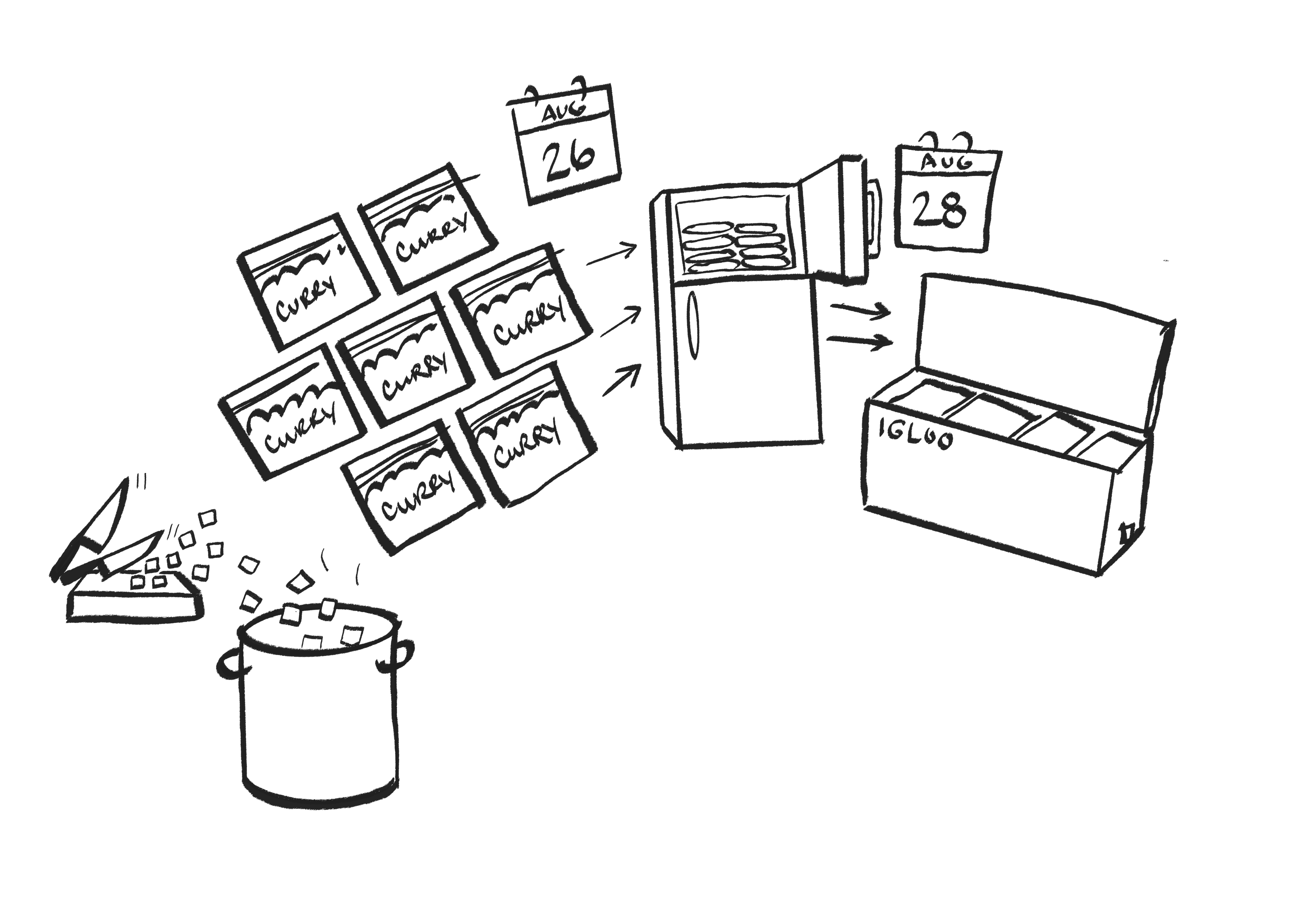
Each Tribe had two designated cooler spots along the kitchen perimeter. A six-stage wash line (compost, prewash, wash, rinse, sanitize, dry) kept grey water as clean as possible in an environment where every drop has to be hauled out. Waste sorting, trash, recycling, and cans in lidded containers, was my design within the camp's guidelines. I also added a new recommendation that Tribes prep and freeze food at home before arriving, cutting down on-playa cooking time and reducing food waste in the kitchen.
Outcomes
The Tribe system ran from 2015 to 2024, when the camp disbanded. I was present for four of those years (2014, 2015, 2017, 2022). The system ran without me for the rest.

The kitchen went from a fragile volunteer operation where meals didn't happen to a structured, self-sustaining system that scaled from 25 to 60 people. New members inherited the structure, ran it, and passed it along. The overview document I created became an onboarding tool that made the system transferable without me being there to explain it.
Why this project is in my portfolio
Tribes took pride in their meals. People showed up, cooked together, and fed the camp well. The system worked because it replaced individual follow-through with group ownership, gave people a reason to coordinate before they arrived, and built in enough redundancy that one absence didn't collapse the meal.

The 2022 infrastructure work followed the same logic at a physical scale. The kitchen layout, wash stations, and cooler zones were designed to make the right behavior easy: find your stuff, cook your food, clean up properly, sort your waste. Systems that depend on people figuring it out in the moment don't hold up under pressure. Systems that make the right path obvious do.

That approach carried directly into my product design work. Observe a system failing, understand why the structure causes the failure rather than blaming the people in it, then redesign the structure so it works without relying on heroics.
Next

Mobile tools for field supervisors

Headway module for bus operators

Core modernization for dispatchers